

Over 1800 pages of
ukulele, guitar and music content. And 146 lessons for FREE or any donations.
Website brought to you by
Curt Sheller
Curt Sheller Publications
www.CurtSheller.com
and hosted by:
[ v2.56.2.0.3 ]
“Folks, if you haven't stopped by Curt's site, do so right now! ..And get his books, they are fantastic. This guy knows his stuff and is able to pass it along too.” - - Alan Johnson Proprietor, The 4th Peg
“I can highly recommend Curt's Uke books -- I have four of them and they are excelent.” - fatveg - Portland
For more information contact curt@curtsheller.com. For available pages visit the ad rates page.
I choose just a few companies whose products I believe in, use and recommend. Nobody else gets to advertise here.
Remembering songs is lot like remembering the directions for a road trip. There are directions, road maps, signs and landmarks. Turn here, turn there, remember this and remember that landmark.
With a few music tools and an understanding of the principles of how music works, especially how chords and chords progressions work. You can start unraveling what's going on in a song or chord progression. There is a lot more in common than you might think. Each song has it's own direction, signs and landmarks.
ALL music comes from some sort of scale and there is not better scale to start with than the major scale.
All music, the chords and melodies come from scales. And, the major is one of the most common and important scales to learn and MEMORIZE in ALL 15 keys.
Most popular songs are in major keys.
My book Harmonic Analysis for Chords Substitution and Scale Selection - Harmonic Analysis is the understanding of the functional sequence of chords. It is the process used to analyze the harmonic structure of a progression, song or composition. This analysis is then used to make scale selections for improvisation and chord substitution.
This numbering system allows for comparing song an identifying the commonality between songs.
The Nashville Number System is an informal method of transcribing music by denoting the scale degree on which a chord is built. It was developed by Neal Matthews, Jr. in the late '50s as a simplified system for The Jordanaires to use in the studio and further developed by Charlie McCoy. It resembles the Roman numeral and figured bass systems traditionally used to transcribe a chord progression. By writing chords as numbers, music may be transposed easily. As a simple system of transcription, it can be used with only a rudimentary background in music theory. Improvisation structures can be quickly explained using numbers and chord changes can be communicated mid-song by holding up the corresponding number of fingers. The system is flexible, and can be embellished to include more information (such as chord color or to denote a bass note in an inverted chord).
The Major Scale or Ionian scale is a diatonic scale, made up of seven distinct notes, plus an eighth which duplicates the first one octave higher. In solfege these notes correspond to the syllables "Do, Re, Mi, Fa, Sol, La, Ti/Si, (Do)", the "Do" in the parenthesis at the end being the octave of the root.
The simplest major scale to write or play on the piano is C major, the only major scale that does not require sharps or flats. The C major scale uses only the white keys on the piano keyboard.
click on below link for complete lesson.
There is a load of information in traditional Key Signatures. Unlocking the principles in this circle leads to a better understanding of music and how think work.
A key signature is a series of sharp or flat symbols placed on the staff, designating the notes that are to be consistently played higher or lower than the equivalent natural notes. Key signatures are generally written immediately after the clef at the beginning of a line of musical notation. Each major and minor key has an associated key signature that sharpens or flattens the notes which are used in its scale.
click on below link for complete lesson.
I V refers to the tonic and dominant chords of a major or minor key.
See the Key Signatures series of lessons for all 15 keys.
eg: C, G or G7. Changes for last chord and everytime the word "whole" is sung.
I V refers to the tonic, subdominant and dominant chords of a major or minor key.
See the Key Signatures series of lessons for all 15 keys.
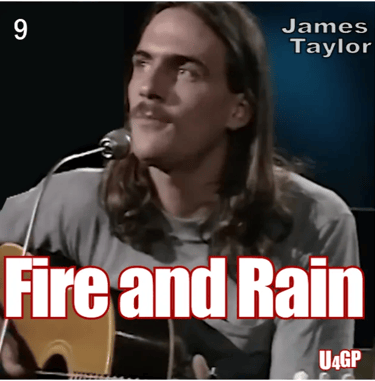
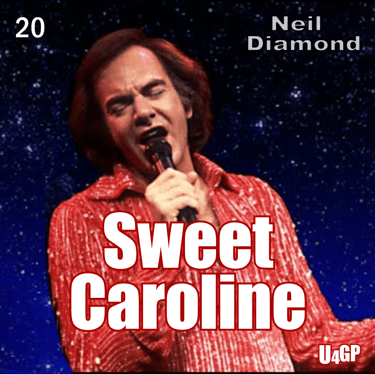
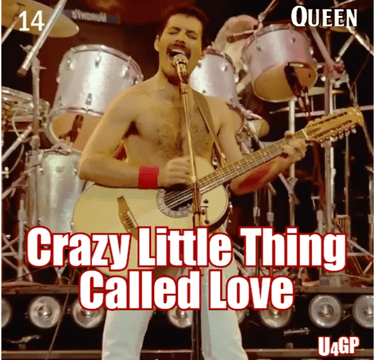
There are a ton of songs using the harmonic sequence. too many to list. So common that you should learn to recognize the sound of this sequence. There's even commercial song books with some variation of "Three Chord Songs".
Here are a few:
I always get verse and chorus mixed up. It's one of those, the first part of the song, the verse and the intro.
The chorus is IV V7 I VI IV V7 I V7 and back to the verse.
(From Artichoke Community Music: Teachers and Workshops)
From simple strumming to advanced fingerpicking and jazz arrangements, I offer all styles and levels of ukulele instruction. Co-author of "The Natural Way To Music, An Organic Approach To Understanding & Playing Music", written with banjo and music theory maven, Bill Keith; we wrote the short course to understanding basic music theory.
Harmonic Analysis is the understanding of the functional sequence of chords. It is the process used to analyze the harmonic structure of a progression, song or composition. This analysis is then used to make scale selections for improvisation and chord substitution.
More info, samples, table of contents, audio, video and more...
ISBN-13: 978-0-9714044-2-7 Published: January 2003 Pages 90
Hearing The Changes are knowing what and when the chords of a chord or chord progressions occur. this lessons gets you on the raod to developing this abaility.
click on below link for complete lesson.
The Major Scale or Ionian scale is a diatonic scale, made up of seven distinct notes, plus an eighth which duplicates the first one octave higher. In solfege these notes correspond to the syllables "Do, Re, Mi, Fa, Sol, La, Ti/Si, (Do)", the "Do" in the parenthesis at the end being the octave of the root.
The simplest major scale to write or play on the piano is C major, the only major scale that does not require sharps or flats. The C major scale uses only the white keys on the piano keyboard.
click on below link for complete lesson.
An Enharmonic Equivalent is where a musical pitch can have different names depending on the context in which it is functioning. An example is G# produces the same pitch as Ab.
Enharmonic equivalents will sound the same but are notated differently using standard music notation.
click on below link for complete lesson.
An interval is the distance between two notes. An interval has a name and a type. They can be played melodically or harmonically.
Simple Diatonic Intervals are taken from a major scale.
click on below link for complete lesson.
There is a load of information in traditional Key Signatures. Unlocking the principles in this circle leads to a better understanding of music and how think work.
A key signature is a series of sharp or flat symbols placed on the staff, designating the notes that are to be consistently played higher or lower than the equivalent natural notes. Key signatures are generally written immediately after the clef at the beginning of a line of musical notation. Each major and minor key has an associated key signature that sharpens or flattens the notes which are used in its scale.
click on below link for complete lesson.
Ear Training is the development of the active and passive capability to relate to music aurally. This includes the ability to recognize melodic and harmonic intervals, chords, chords progressions, rhythm, melody and harmony.
click on below link for complete lesson.
Hard Copy Book: $14.95
PDF Download: $4.95
Volume I of The Advanced Guide to Chord Progressions for Ukulele features the principles of voice leading applied to chord progressions. These principles are explained using chords from volume I of The Advanced Guide to Ukulele Chords. Chapters with common major and minor full diatonic, partial diatonic and chromatic chord progressions are also included to further explore voice leading.
Before individual chords become the background of songs, they must be put into orders called chord progressions. This book organizes progressions according to string family, position, voice leading and chord magnetism. The Advanced Guitar to Chord Progressions for Ukulele is an excellent preparation for the art of melody and chord on ukulele.
If your goal is to expand your chord vocabulary, The Advanced Guide to Guitar Chords Series is your answer.
Commonly referred to as "jazz" chords. The Advanced Guide to Guitar Chords Series provides detailed information on voicing 4-part chords.
[ Back to Songs Main page ]
Content is always being added and updated. So check-in often. Thanks, Curt
P.S. You may think from the look of it that Curt Sheller Publications is a slick, profitable business, but it's actually not (maybe a car payment a month, cheap car). I spend a lot and time money creating the content, lessons and books for this site (a labor of love), so if you dig my content and want to see more of it. I could use your help by spreading the word and maybe buying a book or two if you haven't already, to help defray the cost of running the site. Thanks in advance for your help. This is a labor of love and I'd do it even if I didn't make a lot of money, hey I don't!
You can also make a donation to the lesson-site fund. Button in the sidebar of the site.
If I'm not teaching, I'm working on this site and new lessons, books and goodies.
REMEMBERING_SONGS.PHP | Updated: Monday, 26th March, 2012 @ 08:37am